News
Spine Corrector
At a sports rehabilitation center, a physical therapist is instructing a teenager with scoliosis during training. "It's difficult to precisely control the curvature when doing spinal extension on a traditional mat," he explains. "But on this curved surface, gravity itself becomes the corrective force—that's the irreplaceable value of a spinal corrector." An Overlooked Corrective Tool: From Pilates Equipment to Rehabilitation MedicineSpinal correctors were initially used to assist in spinal extension and core training. However, in the last decade, with the development of sports rehabilitation medicine, it has become one of the standardized devices for conservative treatment of scoliosis, postoperative rehabilitation, and postural correction.
Unlike common foam rollers or yoga wheels, the core value of professional-grade spinal correctors lies in precise curvature calculation—it must simultaneously meet:
Biomechanical requirements: The curvature must match the physiological curvature of the human spine (thoracic kyphosis, lumbar lordosis)
Safety requirements: The material must have sufficient support to avoid secondary injury due to overextension
Functional requirements: It must be adaptable to various training positions (supine, prone, sitting, standing)
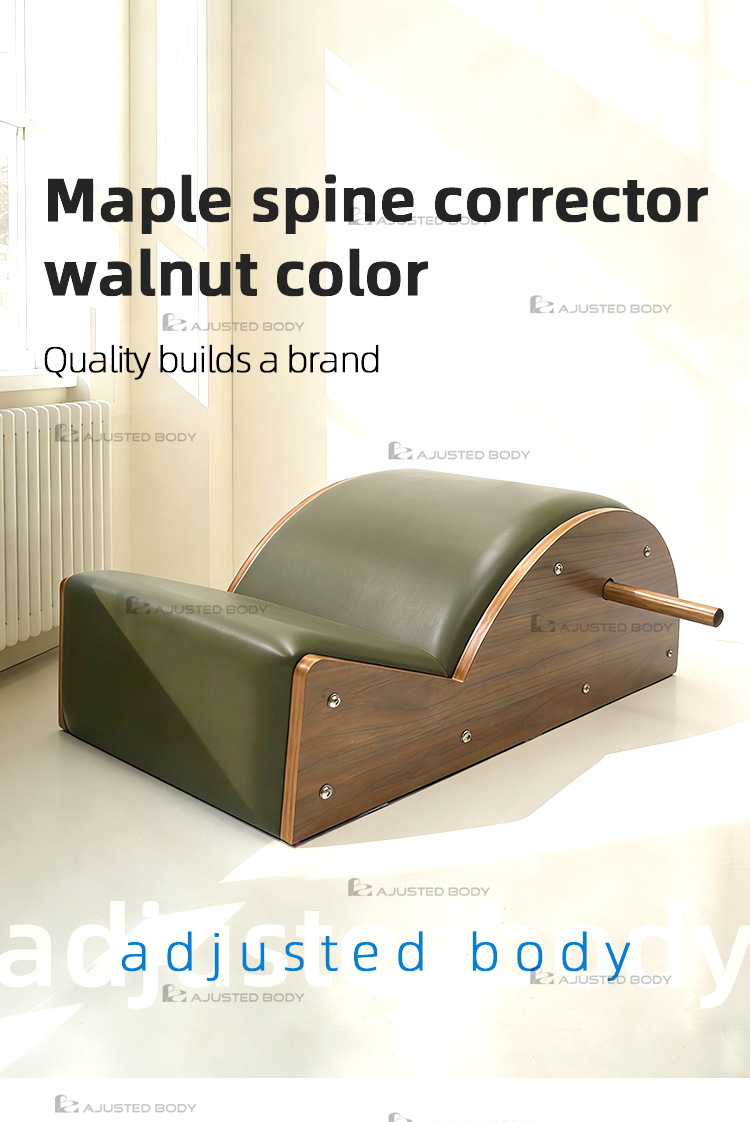
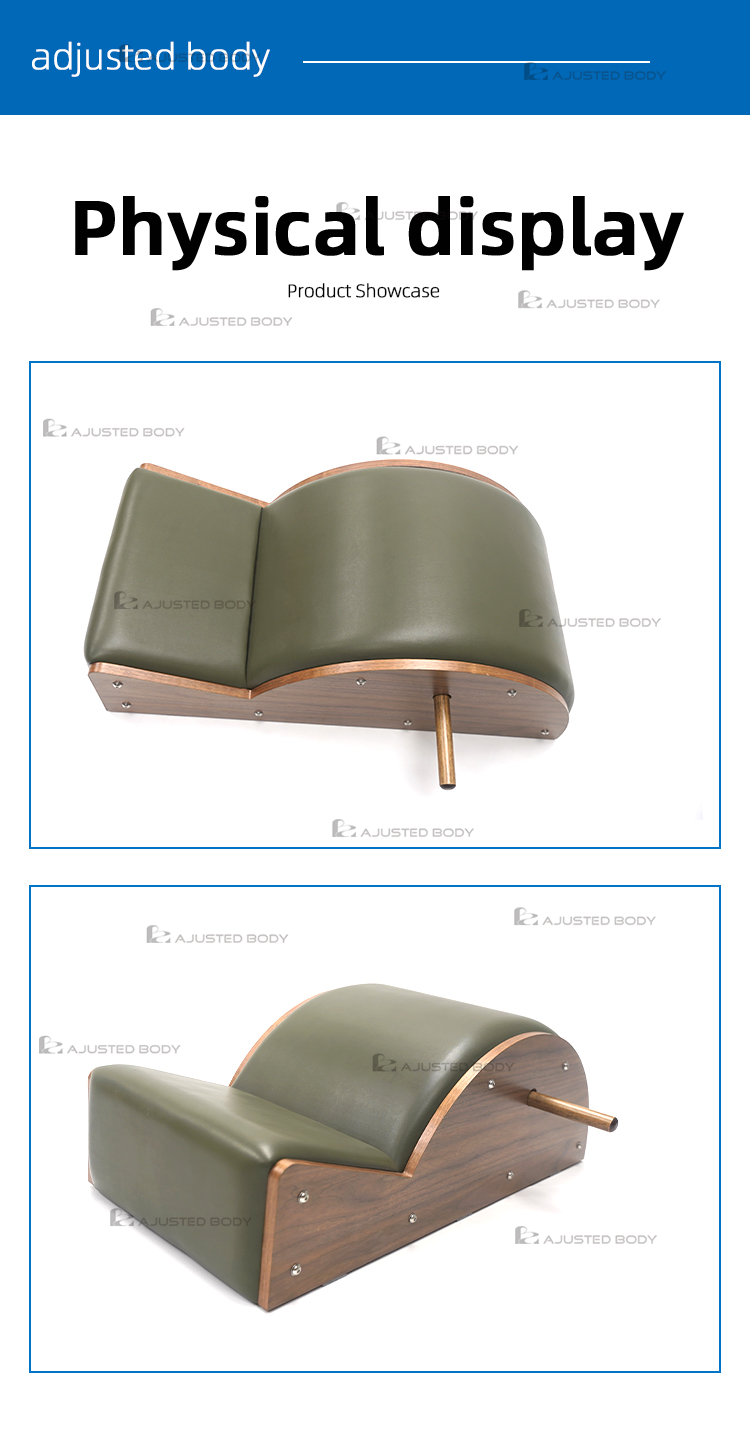
This is precisely the design starting point for the adjusted Body Walnut-color Spine Corrector.
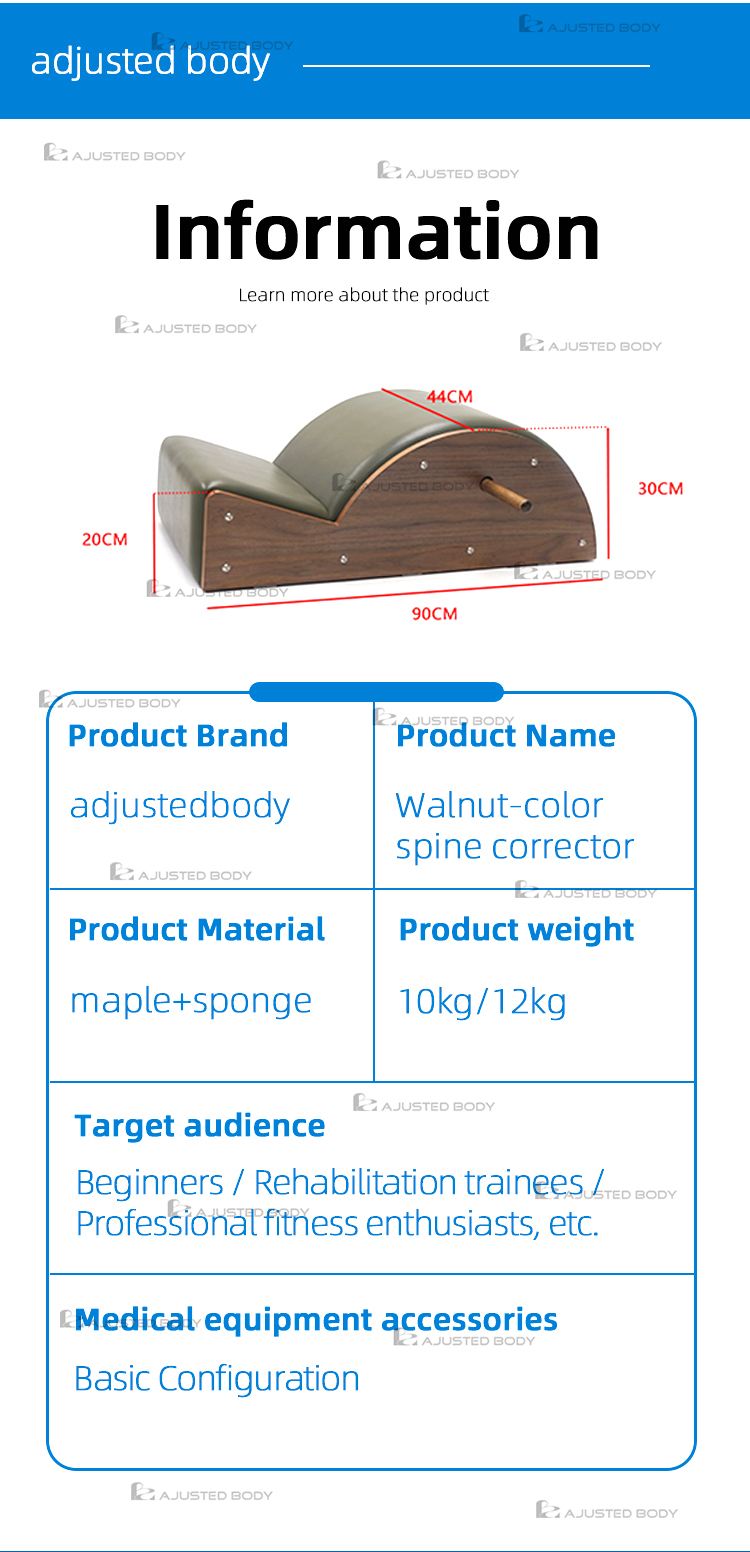
Our design team collaborated with sports medicine experts to precisely calculate each dimension based on Asian body type data:
* Upper arc width: 44cm, matching the transverse diameter of the adult thoracic spine, ensuring free scapular movement.
* Lower arc height: 20cm, corresponding to the lumbar lordosis angle (20°-45°), providing gentle traction.
* Overall length: 90cm, covering the T12-L5 segments, meeting the needs of core stability training.
* Double-arc transition: Smooth curve, avoiding shear forces on the spine during flexion-extension transitions.
* Key insight: The 20cm lower arc height has been tested and validated by over 200 subjects, providing effective gravitational traction without excessive lumbar extension due to excessive curvature—especially important for patients with scoliosis.
Material as Therapy: Why We Choose Maple Over Plastic
Most spinal orthotics on the market use plastic or foam, which, while inexpensive, have significant drawbacks:
Plastic: Uneven hardness, becomes brittle and easily breaks in winter, softens and deforms in summer.
Foam: Insufficient support, collapses after long-term use, losing its corrective effect.
Adjusted Body's Solution:
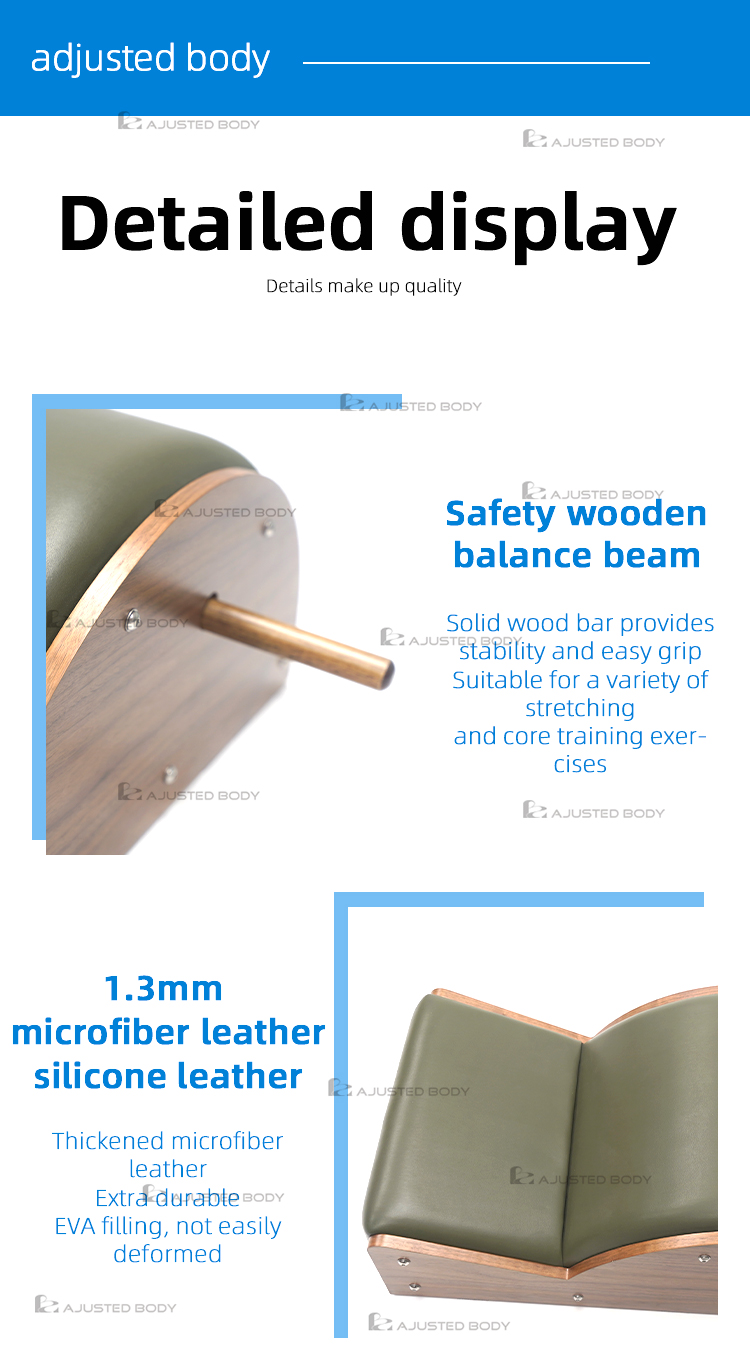
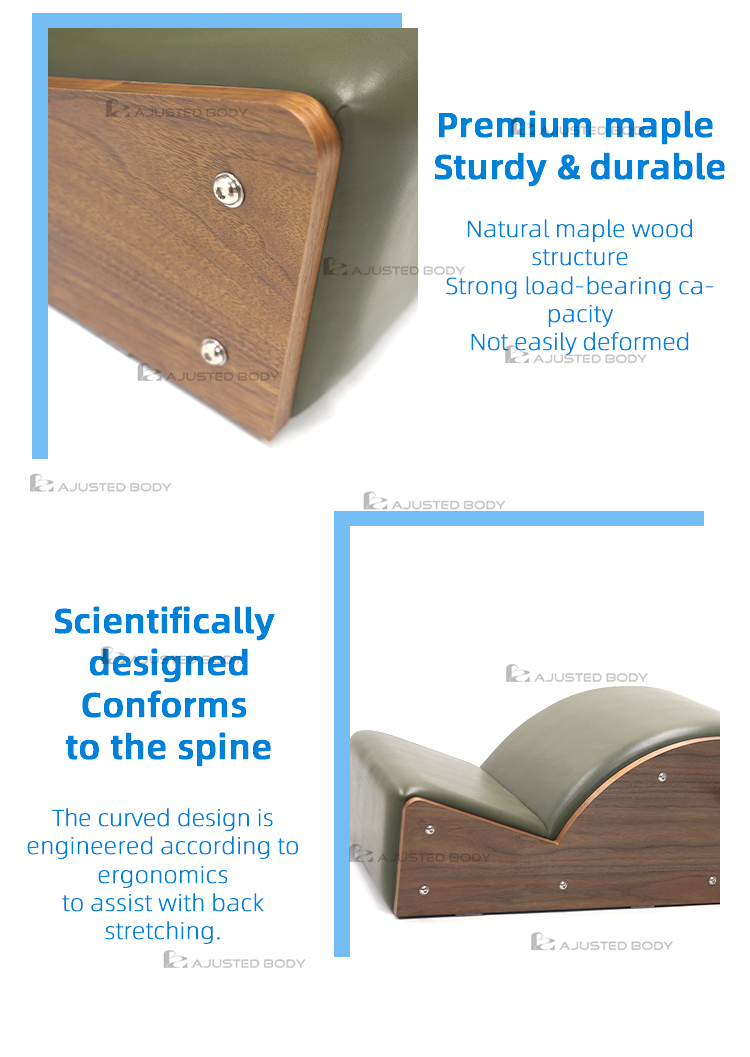
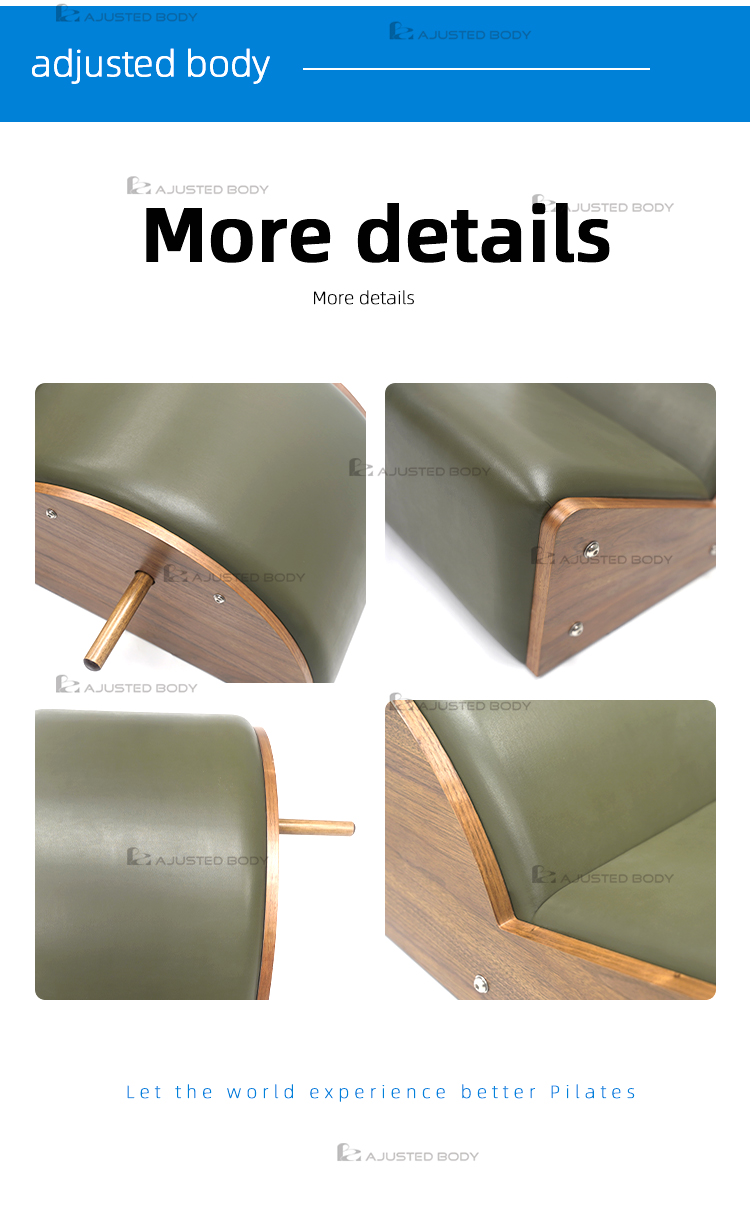
North American hard maple solid wood frame
Uniform density, providing consistent support feedback
Walnut wood finish, warm touch reduces training anxiety
FSC certification, ensuring material sustainability and environmental friendliness
1.3mm microfiber silicone leather
Optimized surface friction coefficient, preventing compensatory movements during slippage
Thickened exercise sponge, distributing pressure points and extending endurance time per training session
Easy to clean and disinfect, meeting medical-grade hygiene standards
RELATED NEWS
- New Crab dumbbell yoga products will be launched soon
- There is a five-piece set ordered by a European customer ready to be shipped.
- Advantages of using aluminum alloy folding reformers at home
- Competitive Advantages of the Pilates Aluminum Alloy Full Track Reformer Compare
- Yoga silicone dumbbell is a kind of fitness equipment designed for yoga, Pilates
CATEGORIES
CONTACT US
Name: Scott.Zhou
Mobile:+86 189 3352 3963
Tel:+86 189 3352 3963
Whatsapp:+86 189 3352 3963
Email:Scott.zhou@deding-honor.com
Add:165 Mingyue 2nd Road, Shiwan Town, Boluo County, Huizhou City, Guangdong Province惠州市博罗县石湾镇明月二路165-1号3楼